'Recollection Box' - Nick Leese has been contributing excellent articles for FdM readers for nearly two years now, but this one is an epic!
BEHOLD THE SEA
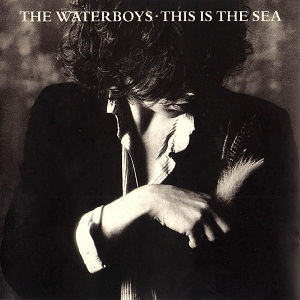
It's approaching Autumn in 1985 and I've no idea of the musical epiphany I'm about to experience while watching a display being put up in the King's Road record shop where I work. It's in stark contrast to the other colourful posters and album sleeves already on show, being in just plain black and white. It's for the soon to be released third album by The Waterboys titled 'This Is The Sea'. The image of Mike Scott on the main poster adjusting the position of a feather in the breast pocket of his jacket and looking more like Jagger than Jagger, has for some reason piqued my interest. Another case of serendipity stirring perhaps? I know nothing about the band, or anything about 'The Big Music' already associated with it, but I already feel sold on the album and have yet to hear it. I've no inkling either, as to how completely overwhelmed I'll be left feeling once I do. Thinking back on that time now, I feel sorry for my fellow workers who for quite a few weeks after the album's release had to endure continual plays! Mike Scott's impassioned vocals, poetic lyrics and emotive music wasn't everyone's slice of something nice, but for me, this album offered up a more meaningful kind of music.
'Three chords and a cloud of dust...', have never quite been enough for me. Discovering The Beatles, The Stones, The Kinks and many other of their 60s contemporaries in the mid to late 70s had already shown me that music could actually be far reaching, not only in the sounds created, but in ways of thinking as well. I'd begun to see music as an extension of my education. I've checked out more books in libraries about something I've heard about in a song than I ever have for the subjects at school. However, I now wanted to hear what the bands of my generation had to offer.
The early 80s U.S. bands had something exciting about them, REM and some of those associated with the 'Paisley Underground', but there was still something missing. It was after hearing the Australian scene that things began to open up for me. Steve Kilbey (The Church) and Dave McComb (The Triffids) were writing songs with intriguing lyrics, often surreal, with this only adding further to their impact on me. The arrival of Mike Scott completed a trinity. Shortly after 'This Is The Sea' appeared I saw The Waterboys live for the first time at London's Town and Country Club. Out of the shadows the band emerged opening with 'Don't Bang The Drum' and that night the stars aligned and had never shone brighter...
'...well here we are in a special place...',
'...what show of soul are we gonna get from you?...'
'...this is sacred ground, with power flowing through...'
There have been times since, when I may have lost touch for a while with the career of Mike Scott and The Waterboys, but there's something that pulls me back, the songs of Mike Scott. They reach deep and instill an appreciation for the spiritual.
By 2004 and with my copy of 'This Is The Sea' beginning to look a tad weary, a remastered and expanded CD reissue of 'This Is The Sea' is timely, so too, the liner notes by Scott finally telling something of the story of the album's making.
The inspirations...
...the simplicity and power of The Velvet Underground. The electronic experiments of Steve Reich, particularly long drone-like chordals that Scott terms 'brass hangings'. Most importantly, the 'atmosphere' created by the songs on Van Morrison's 'Astral Weeks'. Mark Helprin, whose book 'Winter's Tale', was read by Scott while on an American tour with U2 late 1984, also inspires with his imaginative writing.
Scott then goes on to acknowledge the important contributions of band mates Karl Wallinger (sadly missed) and Anthony Thistlewaite, plus Steve Wickham who only makes a brief appearance on 'Sea', but would go on to help shape The Waterboys sound next time on 'Fisherman's Blues'. Scott also and quite modestly, includes his own self taught and primitive musicianship.
After a year's worth of songwriting and gathering of ideas, tentative recordings are made by Scott alone at his London flat, or with Karl Wallinger at his home studio Seaview, beginning in early 1985. Wallinger is a multi-instrumentalist and eager to experiment. He is invaluable to Scott in being able to get ideas onto tape. According to Scott, by the time the album is almost ready to record there are 35 to 40 songs in various stages of completion, but feels the nine finally selected actually chose themselves.
This 2004 reissue is richer in sound and meaning for me. 'Don't Bang The Drum', where the haunting trumpet-led intro merges with the song proper, is now even more powerful. One of the best opening songs to an album, surely? The lyrics, a warning for us to appreciate our place on the earth, reflect the Native American beliefs that Scott returns to often in his writing and ring with even more resonance today. The conciseness of 'Spirit' informs of that essence that enables us to persevere and overcome, even in times when the flesh is weak. 'The Pan Within', tells of the journey towards inner peace, perhaps self-realization,'...close your eyes, breathe slow, we'll begin...' and now needed more than ever, with '...a black wind blowing, a typhoon on the rise, pummeling rain, murderous skies...', yes, turmoil all around. With these lines, 'Medicine Bow' comes crashing like thunder from the speakers, but there's a show of tenacity in there too ... '...I will not sleep and I will not rest, I will put my soul and my will to the test...', no, not until sanctuary is finally reached. 'Medicine Bow' is the beginning of a trilogy of songs that I feel reflect the unrest around us. 'Old England' is Scott's observation on the state of the nation at the time of the album's making. Something has been lost, only to be replaced by greed and austerity from which, some would say, we still haven't recovered. More unwelcome traits appear next, those of anger and paranoia, perhaps a lack of tolerance in there as well, manifested in 'Be My Enemy'. On the surface this song appears an upgrade of Dylan circa 1965, but the line '...if you'll be my enemy, I'll be your enemy too...' is that now all too common knee-jerk reaction in response to certain situations, so how about a little love then, to offer up some respite? Thankfully, 'This Is The Sea' has 'Trumpets', '...and to be with you is to find myself in the best of dreams...', has anyone ever put it better? The mind levelled, now prepare for 'This Is The Sea' to close out the album. The 'atmosphere' of 'Astral Weeks' is everywhere here, its rhythm very reminiscent of 'Sweet Thing'. The music flows, allowing the listener to be carried along, '...once you were tethered, now you are free...'. Oh, I've forgotten something, 'The Whole Of The Moon'! Yes, the hit! A song with enough rich imagery and musical arrangement to make me watch Top Of The Pops again. At least for a short while anyway!
The second disc of the reissue makes for an interesting alternative version of 'This Is The Sea'. Highlights are 'Beverly Penn' (inspired by the characters in 'Winter's Tale'), 'Then You Hold Me' and 'Miracle', all very good songs, but unfortunately not quite fitting with those on the finished album. There's also full length versions of 'Spirit' and 'Medicine Bow', both of which I think would have been suitable for inclusion. 'Spirit' now soars, as it should ('...we're on the heels of Rimbaud...' on less), while 'Medicine Bow' becomes darker and musically, sounding further towards apocalyptic. Better still is the fully realised version of a short instrumental begun one night at Seaview in early 1984...
'The Waves', features just Scott with overdubbed lead and rhythm guitars, Martyn Swain on bass and Karl Wallinger on synthesizer playing a wave-like chord sequence. It's extended here to include a Mike Scott lyric 'The Song Of Sitting Bull', inspired by Sitting Bull's statement he could feel the heart of the earth beat beneath his feet. This image stuck with me for a long time after hearing this track. I find it moving, reflecting once again on the closeness and respect the Native American had for the earth and their surroundings. Another one of those songs I'll happily hear repeatedly once I hear it. Transcending!
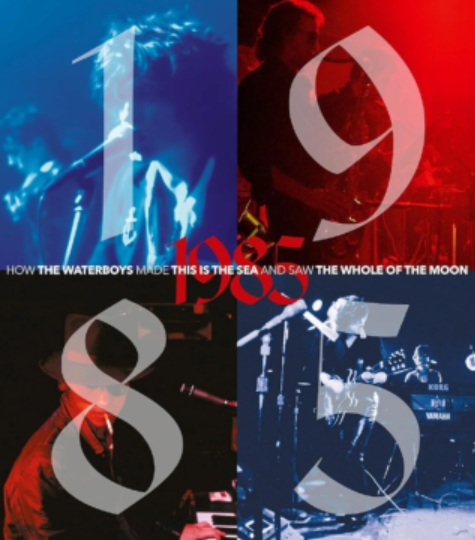
Well, when you wish upon a star....? I resisted 'In A Special Place', the 2011 collection of Mike Scott piano demos for 'This Is The Sea', preferring to take a gamble on an even more expanded set of 'This Is The Sea' era recordings appearing eventually. One that would compliment the 'Fisherman's Box' set. It has been a bit of a wait, but one that ended recently, in 2024, with the six CD set '1985', an absolute treasure trove! Wow, does Mike Scott keep good journals and one tidy archive! With recordings arranged more or less chronologically, '1985' fills in even more on the album's making (audio and text) culminating in an even more powerful sounding version of the finished album. Some call it 'brickwalling', being for the benefit of the smaller size of modern playback devices, but I'll stick with 'powerful' and just the ticket for me with my gig-damaged ears!
The first disc collects the recordings from the year's worth of songwriting and gathering of ideas, 1984 to early 1985, including Seaview/home demos, radio sessions and live recordings made while on tour with U2. What's interesting to discover is Scott's competitive streak, which surfaces in his comments about that tour. He believes U2's pursuit of greatness during the 80s came at the expense of developing their songwriting, implying that they were also prisoners to their effects pedals in order to achieve the 'U2 sound'. It's with relish therefore, that he then describes being able to perform one of his own recently completed songs, on stage, next night, even solo. There's an early performance of the just composed 'This Is The Sea' included here. The need to compete with U2 was obviously doing his songwriting no harm at all then! Perhaps not all these live, or studio efforts were always quite as successful, but a lot of the ideas were and often used later. Mike Scott's mind was now beginning to focus more on the album to be made, exactly how it should sound and with an unwavering determination to see all this through.
Those early 1985 Hastings studio demos made by Scott on piano, with John Brand producing, appear again on disc two of '1985', but there are now even more to hear. The listener finally gets a real sense of the wide scope of songs and ideas that Scott has to choose from. Over two days, he clearly gives everything to the songs, finding which words work with which melodies, with his idiosyncratic piano style almost hypnotizing. If you want to hear a raw, passionate, 'bare bones' version of 'This Is The Sea', then it is here. By the end of the sessions he has hardly any voice left.
On the third day, the other band members arrive and work on the album begins in earnest. After running through the outtake 'Medicine Jack' and needing to rest his voice, Scott decides to work further on musical ideas with just Karl Wallinger and John Brand. They begin with the basic backing track to 'The Pan Within' using a drum machine. This is one of two pearls to be found on the third disc of '1985'. I never realised before just how uplifting the changes in the music to 'Pan' sounded, being always too concentrated on the lyric. The other gem, recorded a few days later (with the return of his voice) is 'This Is The Sea' - drum pad version. Scott's original idea for the song was to have a fast version open the album (already in progress) and a slow version to close, but first he had to choose which verses to settle on from more than twenty he'd written. Working now on the slow version, sitting cross-legged with guitar on the studio floor, he tries out ten of these, as Karl Wallinger taps away on a drum pad. The final result is mesmerising, akin to hearing Dylan put down 'Sad Eyed Lady Of The Lowlands' during the sessions for 'Blonde On Blonde'. I've listened to this particular version of 'This Is The Sea' over and over. It begins much like the album version vocally, but as the groove settles in, Scott's voice drops and works within it while improvising more with the phrasing. John Brand then adds a subtle echo to Scott's voice creating a meditative atmosphere. As I say, mesmerising, all seventeen and a half minutes of it!
Not being entirely satisfied with the progress being made, Scott decides to make some band member changes and John Brand is also replaced by Mick Glossop. Work continues, but the studio time left remaining is beginning to dwindle. The fourth disc documents this stage, with the songs beginning to whittle down to most of those eventually 'chosen', together with two or three other contenders still being held in reserve. Some rough mixes are made and these have some bite to them too. The album begins to come alive. There's just enough time remaining to knock-off a really quite beautiful version of Dylan's 'Sweetheart Like You' from his just released 'Infidels' album. Featuring Scott on vocals and Karl Wallinger on piano, it's attempted apparently just for fun! To my mind, it's better than many of the versions of Dylan songs that have appeared in recent times. Found even earlier in the 'This Is The Sea' sessions (and included on the first disc) there's also a passable rendition of another new Dylan song, the then unreleased 'Death Is Not The End', probably heard by Scott on one of the slew of 'Infidels' sessions bootlegs available at the time. I wonder if they ever tried 'Blind Willie McTell'? Now that would be something to hear! Dylan and his music would feature again later in this story, providing a scoop for '1985'.
Studio time runs out in Hastings and so the band return to London to continue sessions with Mick Glossop at Townhouse Three Studios. Lead guitar overdubs are added to the fast version of 'This Is The Sea' by Scott, but they're not to his satisfaction. As luck would have it, Tom Verlaine is in London at this time, living upstairs at Townhouse and is a friend of Mick Glossop! Invited to participate, Verlaine manages to achieve what Scott can't in just a handful of attempts. This is the version that appears on the earlier 'The Secret Life Of The Waterboys' rarities collection, but for '1985' and in a tribute to the recently passed Verlaine, Scott has edited together a new version from a couple of Tom's unused takes, wrapping things up with a new vocal. How Verlaine manages to squeeze quite so many notes into the smallest of musical passages is testament to his musical ability. I still don't feel that the fast version of 'This Is The Sea' (also called 'That Was The River') works, it feels too rushed and has none of the atmosphere of the slower version and besides, with 'Don't Bang The Drum' now nearing completion, there's no argument as to which song should open the album!
However, Scott is unsure of results gathered so far and decides to finish the sessions with himself producing, this time at Livingston Studios in North London. There are a handful of these Livingston mixes scattered over discs four and five, but they lack the spark Scott of the earlier mixes made. This is noticeable too, even to these ears, they're a little 'cloudy' in sound, so he again recruits Glossop and between them the album eventually attains its final magnificence! How true Scott doggedly remains to his vision for how 'This Is The Sea' should sound! No wonder he remembers to also thank Anthony Thistlewaite (in his 2004 notes) for calling in on him one day and taking him out for a reviving car ride into the countryside when one time, work on the album was becoming too much for him.
The album is finally released , 'The Whole Of The Moon' a hit, radio sessions are booked and a tour is underway, but amid all this activity, there's, and apologizes in advance for the pun, yet another (simple) twist of fate that awaits our intrepid troubadours. Bob Dylan is in town recording. He's apparently heard 'Moon' and cordially invites Mike Scott, Anthony Thistlewaite and Steve Wickham down to help out. With obviously nothing else to do (!) they duly show up and work on an untitled Dylan instrumental. What it must have felt like to be Mike Scott at this time, eh? However, having now formed World Party, Karl Wallinger has decided to leave and so more is added to the workload as the band sets about auditioning for new members. They use the Dylan instrumental for these tryouts with Scott recording the results onto cassette for reference. During the preparation of '1985' he checks with Bob for the title of the track and asks his permission to use it. Thus, 'Meridian West' appears on '1985' exclusively.
Towards the end of '1985', there's also and recorded for radio, yet another variation on 'This Is The Sea'. It includes further lyrical changes and is retitled, to reflect this, 'Behold The Sea'. In his notes Scott interestingly remarks that this version is not only the completion of the 'This Is The Sea' era, but closure of 'The Big Music' too, but I would argue otherwise. I've always seen the next album, 'Fisherman's Blues', as a continuation of 'The Big Music', albeit this time sourcing gospel, folk and country music for inspiration, like 'Music From The Big Pink'. These songs are still inherently spiritual to me and sound just as powerful as any found on 'This Is The Sea', even though the arrangements are more stripped-down, being predominantly acoustic. Subsequent live performances from this time prove this, they left me almost levitating!
Listening to '1985', I return once more to that time when I first heard 'This Is The Sea'. I'm in my early twenties and recently arrived in the 'Big City', in search of something, but not quite sure what. The words and music on 'This Is The Sea' are enlightening, they change my whole outlook. 'Heyday' by The Church does much the same thing for me a year later as well. To once more quote Dylan, '..I can't help it if I'm lucky...'! This is 'high art' for me, at least in my time. I read Scott's 2004 notes again, where he writes of his 'desire to inspire' and 'a belief in music and song as forces of transformation and evocation'. It's what 'This Is The Sea' does for me, still...
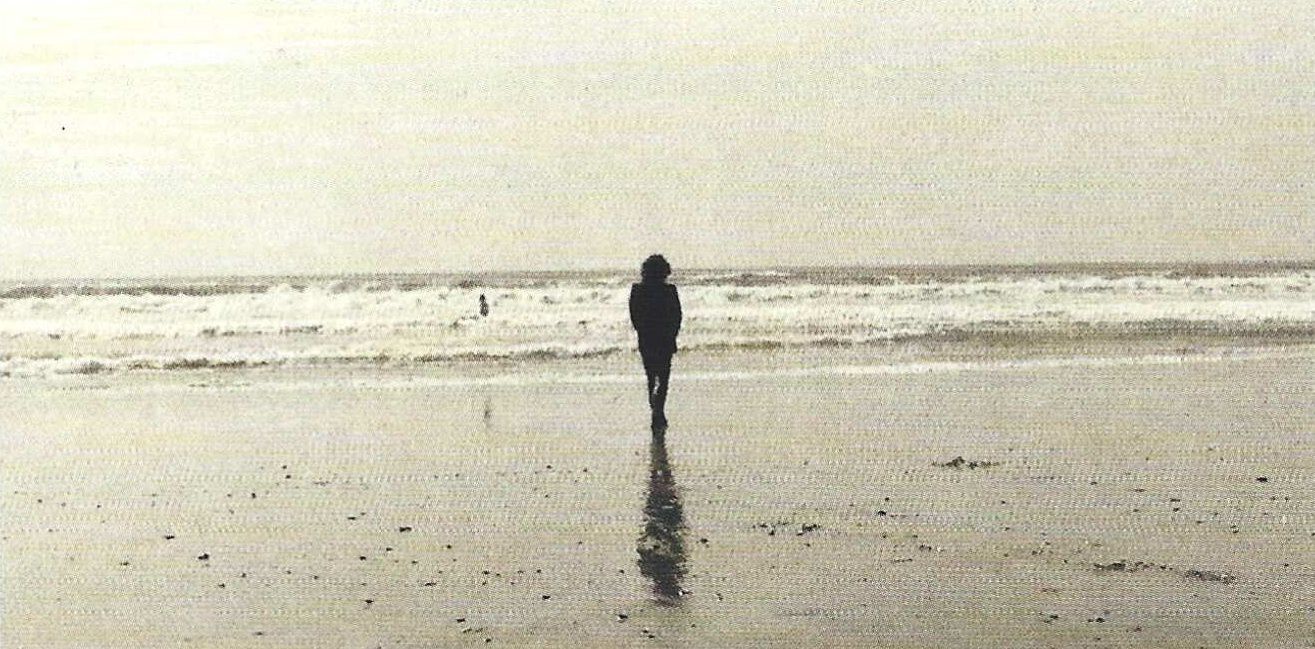
Before I go for a lie down after all this excitement, I'll close by mentioning a photo of Scott found towards the back of the '1985' booklet, one that caught my eye and imagination. He's standing alone with his back to the camera, just in the distance, staring out at the sea on Venice Beach, sometime in 1986. He's looking out at something vast, powerful and with depth...
...'This Is The Sea'.



 It's approaching Autumn in 1985 and I've no idea of the musical epiphany I'm about to experience while watching a display being put up in the King's Road record shop where I work. It's in stark contrast to the other colourful posters and album sleeves already on show, being in just plain black and white. It's for the soon to be released third album by The Waterboys titled 'This Is The Sea'. The image of Mike Scott on the main poster adjusting the position of a feather in the breast pocket of his jacket and looking more like Jagger than Jagger, has for some reason piqued my interest. Another case of serendipity stirring perhaps? I know nothing about the band, or anything about 'The Big Music' already associated with it, but I already feel sold on the album and have yet to hear it. I've no inkling either, as to how completely overwhelmed I'll be left feeling once I do. Thinking back on that time now, I feel sorry for my fellow workers who for quite a few weeks after the album's release had to endure continual plays! Mike Scott's impassioned vocals, poetic lyrics and emotive music wasn't everyone's slice of something nice, but for me, this album offered up a more meaningful kind of music.
 Well, when you wish upon a star....? I resisted 'In A Special Place', the 2011 collection of Mike Scott piano demos for 'This Is The Sea', preferring to take a gamble on an even more expanded set of 'This Is The Sea' era recordings appearing eventually. One that would compliment the 'Fisherman's Box' set. It has been a bit of a wait, but one that ended recently, in 2024, with the six CD set '1985', an absolute treasure trove! Wow, does Mike Scott keep good journals and one tidy archive! With recordings arranged more or less chronologically, '1985' fills in even more on the album's making (audio and text) culminating in an even more powerful sounding version of the finished album. Some call it 'brickwalling', being for the benefit of the smaller size of modern playback devices, but I'll stick with 'powerful' and just the ticket for me with my gig-damaged ears!